









Loopholes Archives - Think Outside the Tax Box

Loopholes

By Dominique Molina, CPA MST CTS

The 5X Deduction Trap: When a Tax Shelter Creates a Loss Your Client Can’t Use

The pitch is hard to ignore. Simply invest $100,000 and receive a $500,000 tax deduction. The mechanics sound straightforward. All you have to do is contribute $100,000, and financing provides the remaining $400,000 needed to acquire $500,000 of depreciable property. If the property qualifies for 100% bonus depreciation, the transaction may generate as much as $500,000 of first-year depreciation. At an average tax rate of 30%, you save $150,000 in tax – more than the cash you put in! If it sounds too good to be true, think again. Lots of assets qualify for this, and there seems to be no shortage of investment opportunities. Things like tiny homes, solar equipment, energy projects, lasers, or packaging machinery under equipment leasing to name a few. The specific asset changes, but the tax story is remarkably similar: use leverage to turn $1 of cash investment into $5 of depreciable basis, and voila, potentially $5 of deductions. Yet there is an important tax question missing from those sales presentations. Assume for the moment that every dollar of basis is legitimate and every dollar of depreciation is allowable. Can your client actually deduct the resulting $500,000 loss against the income the strategy was intended to shelter? That's where the sales illustration ends and the tax analysis begins.

READ MORE

Where in the World Are Your Game Dev Clients’ International Tax Compliance Concerns?

Over the past three decades, technology literally opened up the entire world in waves. But before there were memes about work-at-home humor, indie game developers pioneered releasing full-length titles across multiple time zones with people we never met in person as our real-life neighbors thought that we didn’t work at all. In 2026, you’ll get fewer weird looks for saying that you have a home-based remote business than you did 20 years ago. Mentioning international business in New York or Miami never made anyone blink, but today, this is also true in areas so remote that you can’t DoorDash a pizza: indie developers now find each other in Discord groups, online industry events, and social media. Just like 2006, teams are often split across countries. How do tax practitioners untangle the inherent complexities of international business for their game studio clients?

Read More

Help Your Clients Implement a Fortune 500 CFO Strategy

For decades, some of America’s largest corporations have used a financial strategy that gives their CFOs greater control over insurance costs, helps them finance risks the commercial market handles poorly and creates an opportunity to retain underwriting profit when losses come in below expectations. Approximately 90% of Fortune 500 companies have captive insurance subsidiaries.¹ Historically, the economics favored organizations with substantial capital, large insurance programs and the resources to support their own insurance operations. Small and midsize businesses rarely had the scale to justify the cost and complexity. That equation has changed. A mature network of specialized insurance professionals and structures now allows qualifying privately held businesses to pursue many of the same risk-financing advantages. Federal tax law can further improve the economics for certain smaller insurance companies. For CPAs and tax professionals, this creates an advisory opportunity. The challenge is recognizing which clients could benefit and what conditions must exist before recommending it.

Read More
Client Alert

The Tips Deduction and the Self-Employed: Potholes Everywhere

By now, tax professionals and taxpayers are familiar with the fact that the One Big Beautiful Bill (OBBBA) created a new tax deduction for tips received. What we want to look at in this article is — how do self-employed taxpayers handle this deduction?

Read More
Client Alert

What To Watch Out For With Family Limited Partnerships

The story of Anne Milner Fields is one of the reasons family limited partnership (FLP) opinions appeal to me so much. Born in 1925, she grew up in a small town in Texas and then moved to Dallas where she got a job as a secretary and met prominent oil man Bert Fields Sr. They married, and she lived the life of a socialite until he died in 1963. She consciously turned herself into a businesswoman, going so far as to take accounting courses. Having no children or grandchildren, she took her grandnephew, Bryan Milner, under her wing, paying for his education and mentoring him. In 2010, the year she turned 85, she made him executor of her estate and gave him a general power of attorney. He was also set to inherit the residue of her estate after some specific bequests. I really think we have the elements of a novel or a TV miniseries here, but we are tax people, so we are going to focus on how Anne’s estate tax was handled after she passed. It didn’t go well.

Read More

Real World Ethics: What Happens When a Judge Doesn’t Understand Tax Law

We all know how messy tax returns can get when couples who used to file jointly divorce and there are children (and tax credits) involved. It’s often difficult to explain the rules surrounding Head of Household filing status and the various tax credits available to parent-clients who have separated or divorced. But what happens when the clients misunderstand and decide to fight about it in family or divorce court? The following case study says “nothing good” can be a horrifying and frustrating answer to this question.

Read More

One of the Most Important Things a Tax Advisor Can Do: Help Their Client Stay in Business

CPAs routinely help clients improve tax efficiency, yet one of the most consequential advisory questions is whether the business itself could remain operational after a significant uninsured loss. Tax planning improves after-tax cash flow and strengthens annual performance, but continuity planning determines whether the enterprise can withstand disruption long enough to recover. When an adverse event threatens operations, liquidity and stability often matter more than marginal tax savings. For that reason, the discussion of risk funding deserves to sit alongside traditional tax strategy in any comprehensive advisory relationship.

Read More
Client Alert

Syndicated Easements: Fresh IRS Offer and the Perils of Post-BBA Gamesmanship

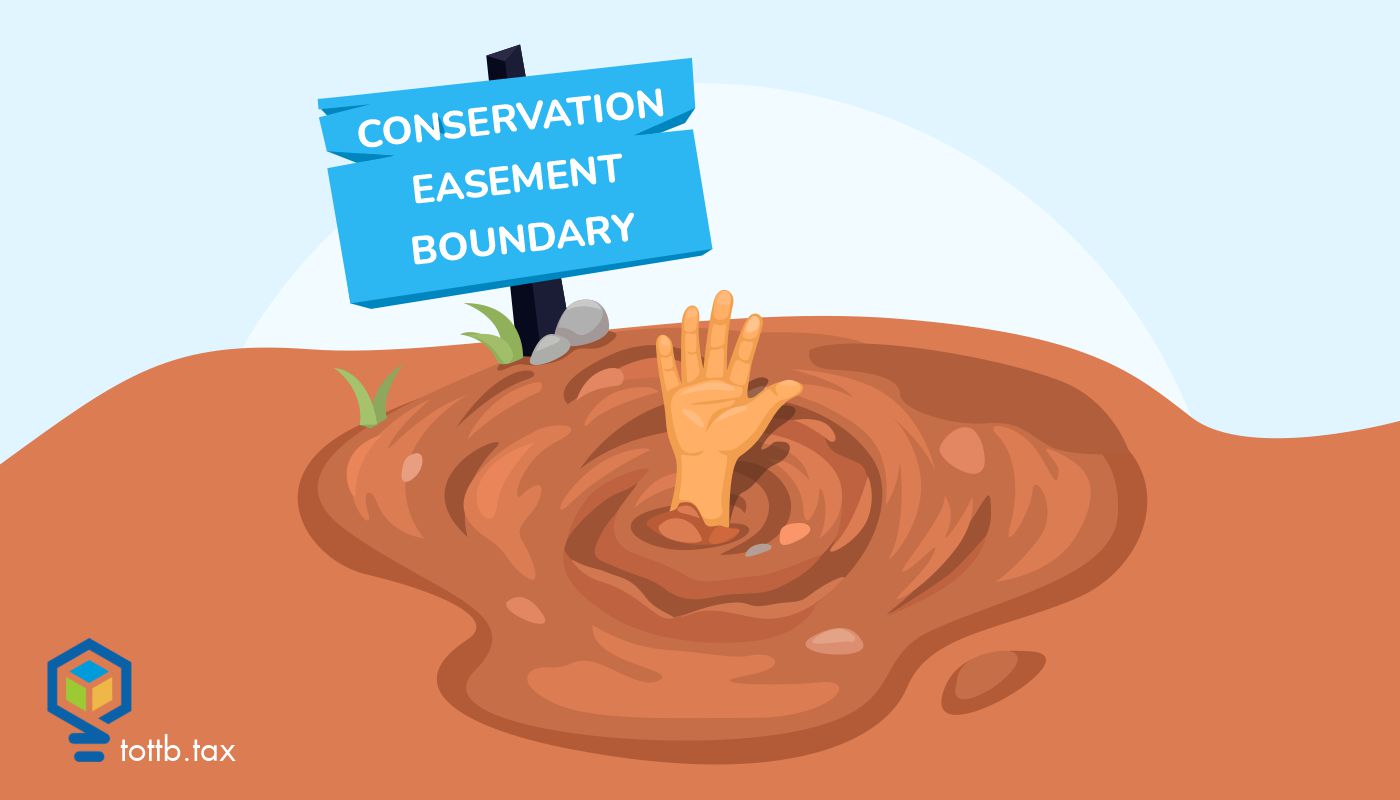
The IRS has issued a statement about a new settlement offer that is going out for conservation and historic preservation easement disputes. It is similar to previous offers, but there is one big difference. The partnership will not have to make a payment at the time that it accepts the offer. Other than that, it is similar to the deal offered in 2020. Taxpayers get to deduct what they are out-of-pocket as an ordinary deduction and are subject to a 10% penalty. In general, the out-of-pocket donation might be around 20% to 25% of the claimed charitable deduction. The Tax Court, on average, has been allowing 6%, although results vary. There is usually a 40% penalty in the decided cases.

Read More

TAX COURT ROUNDUP – August 2026

One would think that now, with summer doldrums and vacation days planned, Tax Court operations would slow and we could all go away. Not this month; six full-dress T. C. opinions and some Memos and miscellany fall like a summer cloudburst. Busy times.

Read More
1 2 3 … 18
  • NOT A Subscriber YET?

    SUBSCRIBE TO GET ALL OF OUR
    GREAT ARTICLES AND RESOURCES!

  • Scroll to Top

    turn new laws into new opportunities download our FREE ebook


    Download Our FREE Magazine!

    Download Our FREE Magazine!

    Thank you for subscribing to Tax Law Pro

    You are granted a non-exclusive, non-transferable, revocable license to access and use Tax Law Pro by Think Outside the Tax Box, Inc., strictly according to these terms of use.