

The NIL Tax Playbook
Regardless of where you stand on the issue, student athletes have been able to tap into a new revenue stream since July 1st, 2021. This is when the National Collegiate Athletic Association (NCAA) began to allow students to profit from their name, image, and likeness (NIL). Which leads to new tax implications for a group of taxpayers who may have never filed a tax return before. As this has unfolded, it reminded me of taxpayers who were on the forefront of making money online. It was something new, so not many taxpayers or even tax practitioners knew how to handle it. It was real money, but was it really a business? I’ve loved seeing it evolve. Now, right off the back of COVID-19, we have student athletes who are able to take advantage of their online presence and also make money. But the income people were making 20 years ago online is pennies compared to what some students can make through NIL deals. In 6 short years, students have gone from not being able to profit monetarily from their likeness while competing as a student to now potentially making millions.
READ MOREIs Your Spouse Innocent or Injured? Part One: The Injured Spouse
Jack and Jill went up the hill to have a lovely wedding Jack fell down and broke his crown When Jill learned all his tax debts That pretty much describes the origin of the taxes faced by an injured spouse: The taxpayer was not married to that spouse at the time he or she incurred the tax obligation or it was assessed or did not sign the tax return where the balance due originated. In other words, it was never the injured spouse’s debt or obligation in the first place. What kinds of debts or taxes might the IRS collect (or “offset”) that would affect the injured spouse’s refund?
Read More
Avoiding the Repayment Cliff: Mitigating the Effects of Miscalculating the Advance Premium Tax Credit
The premium tax credit (PTC) is a refundable credit that is available to certain individuals “whose household income for the taxable year equals or exceeds 100%, but does not exceed 400% of an amount equal to the poverty line for a family of the size involved.” In other words, it’s a refundable tax credit that specifically subsidizes the cost of insurance purchased on a health care marketplace for individuals who are over the federal poverty level (FPL), but not by 400 percent or more. This credit is available as an advance paid directly to the marketplace for qualifying taxpayers who cannot afford (or do not wish) to pay their full monthly premium out of pocket. The amount of the credit is calculated based on estimated annual household income. When taxpayers receive more advance credit than they are entitled to, they must repay the excess. So, the consequences for an intentional or inadvertent underestimation of annual income can be severe. What follows is an overview of how the credit works and describes strategies for reducing the amount of advance premium tax credit (APTC) the taxpayer must repay both immediately and after the fact.
Read More
Coronavirus Tax Credits – How the Self-Employed Can Benefit
March 18, 2020, was a big day for tax bonuses. Congress passed the Families First Coronavirus Response Act (FFCRA). The bad news is this bill requires certain employers to provide two weeks of paid leave to employees impacted by COVID-19. The good news is that when you provide it to your employees, you get a juicy tax credit to reimburse you for these benefits. If you’re self-employed, you may have noticed you tend to miss out on certain tax benefits designed for companies with employees. But in the case of FFCRA, these credits are also available when you are your own boss. Continue reading to find out how to get this cash as soon as the end of the current quarter.
Read More
How Late Is Too Late to Request a Late S Election?
Question: How Late Is Too Late to Request a Late S Election? Answer: Late in 2020, the IRS issued a Private Letter Ruling related to a late S election request for relief. Generally, you must file a request to become an S corporation no later than the 15th day of the third month of the taxable year for which the election is to take effect. If you miss this deadline, or don’t file an election at all, the business is generally considered a C corporation or LLC. If you’re like most business owners, however, you may not have known at the time you formed your business all the tax benefits available to you by holding your business as an S corporation. Whether you were unaware, or for some other reason, it may be well past the official IRS deadline to make this request for the current or recently ended tax year. If you haven’t yet filed your tax returns at all, you may be qualified to use the relief available by following the proper procedures. You may also wonder, “How far back can I go in changing the way my business income is taxed?” To learn more about how far back and how long you can be “fashionably late,” continue reading.
Read More
Monetized Installment Sale – Risky Business
The monetized installment sale (MIS), which is more of a product than a tax concept sounds very attractive. In the right circumstances MIS promises a very long deferral of capital gains tax for a reasonable cost. But does the strategy actually work?
Read More
Land Conservation Easements: Tax Avoidance or Evasion?
Question: I was going to look into a conservation easement (CE) for a client and noticed the IRS has focused heavily on compliance efforts for abusive syndicated transactions. Are there any legitimate conservation easement transactions, or is it best to stay away from this strategy until things calm down? Answer: Sounds too good to be true, right? A $500,000 charitable tax deduction for a $100,000 land purchase in December. In your search for information, you may be scared off by the court cases and Department of Justice investigations of the promoters of syndication easements. Syndication deals are partnerships that own land ideal for conservation and allow groups of investors to pool their money in the business, which typically will also include other activities beyond just the land ownership. These deals have come under heavy scrutiny in the past few years as CEs became a listed transaction and more cases have wound their way through the court system. The IRS even announced a settlement program for syndicated conservation easements in mid-2020. Click here to read the full answer.
Read More
Deducting Business Meals and Entertainment: The good, the bad, the very recently changed
“Say dog.” My dad once told me that a friend paid for his lunch and said, “Say dog, then I can write this off.” She bred show dogs. File that under “nope.” That is not how the meals and entertainment (M&E) deduction works. Not even before the Tax Cuts and Jobs Act (TCJA) changed the rules. The deduction for M&E is a favorite of many of our clients and rightfully so. Nevertheless, it can be a fraught area if taxpayers and their advisors don’t have a comprehensive understanding of how the rules for deducting expenses apply across the many different scenarios in which our clients are likely to apply them. The IRS issued the final regulations for deducting M&E expenses under Internal Revenue Code (IRC) § 274 on October 9, 2020. It made some additional, short-term adjustments when the Consolidated Appropriations Act (CAA) became law on December 27, 2020. Here is an overview of the new regulations, how to use them to your clients’ benefit, and how to avoid the most common pitfalls.
Read More
How to Turn a 1031 Real Estate Capital Gain Into a Passive Investment
You may be familiar with the concept of a 1031 exchange as a way to defer gain on the sale of rental or investment real estate. But what happens when you want to completely exit the real estate game? A 1031 Exchange may not be the best option for you. There are a few drawbacks associated with a 1031 exchange, including the limited time frame you must acquire the replacement property, and that you must continue to invest in real estate. If you’re looking to continue deferring current or previously exchanged gains, a Delaware Statutory Trust (DST) may provide a solution to these issues. But investing in a DST property or properties is like any investment. It comes with its own risks and rewards. Read on to find out more.
Read More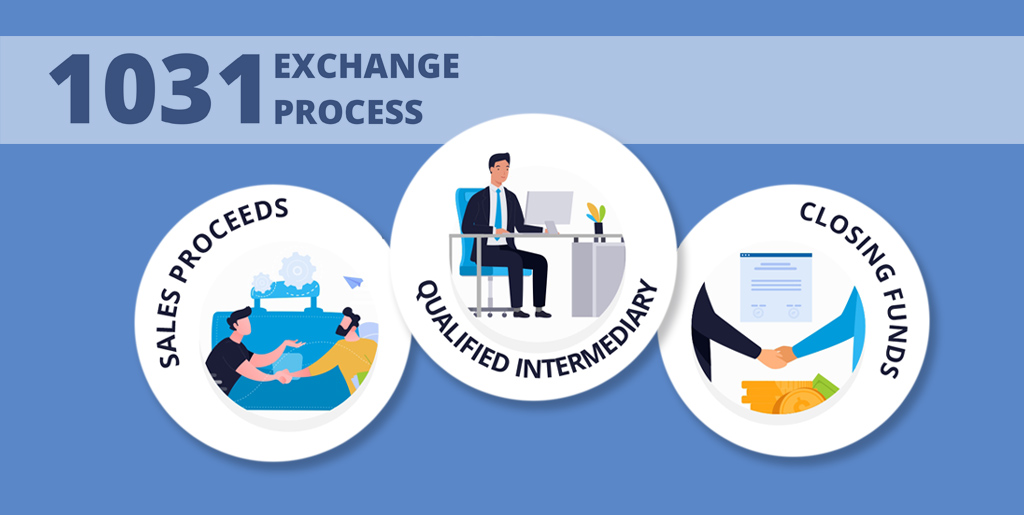

The NIL Tax Playbook
Regardless of where you stand on the issue, student athletes have been able to tap into a new revenue stream since July 1st, 2021. This is when the National Collegiate Athletic Association (NCAA) began to allow students to profit from their name, image, and likeness (NIL). Which leads to new tax implications for a group of taxpayers who may have never filed a tax return before. As this has unfolded, it reminded me of taxpayers who were on the forefront of making money online. It was something new, so not many taxpayers or even tax practitioners knew how to handle it. It was real money, but was it really a business? I’ve loved seeing it evolve. Now, right off the back of COVID-19, we have student athletes who are able to take advantage of their online presence and also make money. But the income people were making 20 years ago online is pennies compared to what some students can make through NIL deals. In 6 short years, students have gone from not being able to profit monetarily from their likeness while competing as a student to now potentially making millions.

D&A Planning After the One Big Beautiful Bill Act
After 2021, whether an expenditure was deducted currently or recovered through depreciation often affected timing, but it typically did not create a meaningful advantage from a Section 163(j) perspective. The restoration of depreciation, amortization, and depletion addbacks in the computation of adjusted taxable income (“ATI”) has changed that analysis and created a new opportunity for taxpayers with actual or anticipated interest limitation exposure. As a result, taxpayers should reconsider whether certain expenditures that historically may have been deducted immediately can instead be capitalized into depreciable or amortizable property in order to improve their Section 163(j) profile.

What To Watch Out For With Family Limited Partnerships
The story of Anne Milner Fields is one of the reasons family limited partnership (FLP) opinions appeal to me so much. Born in 1925, she grew up in a small town in Texas and then moved to Dallas where she got a job as a secretary and met prominent oil man Bert Fields Sr. They married, and she lived the life of a socialite until he died in 1963. She consciously turned herself into a businesswoman, going so far as to take accounting courses. Having no children or grandchildren, she took her grandnephew, Bryan Milner, under her wing, paying for his education and mentoring him. In 2010, the year she turned 85, she made him executor of her estate and gave him a general power of attorney. He was also set to inherit the residue of her estate after some specific bequests. I really think we have the elements of a novel or a TV miniseries here, but we are tax people, so we are going to focus on how Anne’s estate tax was handled after she passed. It didn’t go well.