


At Around the Tax World, you can find out all about what’s going on in the wonderful, worldwide world of tax. Every month, we’ll feature a few mini-articles on what’s been going on in the world when it comes to tax, and fully available for viewing even if you don’t have a subscription.
If you wish to subscribe and gain access to all articles on the site, be sure to check out the benefits of doing so here!
Check out what’s happening all around the world of tax!
In The Headlines
SpaceX’s latest PR move? Giving one share of stock to every child in America. Elon Musk’s space travel and AI company had the largest ever IPO this summer at $1.77 trillion. Now Musk is pledging to give some of those shares to the 72 million children currently living in the U.S. This donation would be worth an estimated $10.5 billion, based on SpaceX’s current stock price. Many saw this move as a reaction to Anthropic’s recent announcement that it would be establishing a “public benefit fund” to make large donations to charities or provide financial help to specific populations. Anthropic is currently planning its own IPO, which is expected to happen before the end of 2026. Musk may also be seeking to reshape SpaceX’s public image after the company came under criticism for restricting satellites internet services used by the Ukrainian army in its war with Russia. The CEO has not yet clarified how the stock donations would take place, though some have speculated that he may do so through the Trump Accounts program.
KFC says goodbye to Pepsi and hello to Coca-Cola. Yum! Brands, the owner of the Kentucky Fried Chicken fast food chain, recently announced that Coca-Cola would become its beverage provider for all U.S. restaurants starting in 2027. PepsiCo will still be KFC’s beverage provider in the international market, but estimates suggest that the loss of the U.S. market will result in a $50 million dip in revenue. This is the latest in a string of financial losses for PepsiCo. In April, the beverage company also lost its contract with hotel chain Marriott as they pivoted to Coca-Cola. PepsiCo has seen a double-digit percentage drop in its stock prices this year. However, the split from KFC is especially significant given the company’s history. Yum! Brands was previously owned by PepsiCo until it became an independent company in 1997. The fast food corporation owns KFC, Taco Bell, and until recently, Pizza Hut, which was sold this year for $2.7 billion.
Microsoft and Adobe have been suspended from a green card program for skilled workers. The Trump administration has been removing pathways for immigration since taking office in 2025. Now the president is reducing the H-1B program that has allowed many foreign tech workers to pursue permanent residency. Most employment-based green cards require companies to file a PERM application—the official labor certification process in the U.S. As part of this application, employers must demonstrate that a foreign hire will not result in a reduction of wages or jobs for U.S. workers. Microsoft has filed the largest number of PERM applications, bringing in almost 3 million foreign workers since 2009. Vice President JD Vance recently accused Microsoft of abusing the system and laying off 6,000 American workers while hiring 6,300 others on H-1B visas. The tech giant argued that 80% of its visa applications were to extend visas for current employees or change their status. Adobe, Capgemini, Cognizant, HCL Technologies, Infosys, and Wipro were also suspended from the H-1B program.
What's New In The Tax World?
Trump promotes a gas tax suspension, but Congress is unlikely to revisit tax legislation until November
The results of the midterm elections will likely determine if we see any new tax legislation this year. Congress’ next full session is scheduled for November 9th, about a week after Election Day. Known as the “lame duck” session, this is the most common time for lawmakers to push through new bills if they are leaving office or if their party has lost control of the House or Senate. Experts speculate that end-of-year tax bills could include:
- A renewal of the Work Opportunity Tax Credit, which covers expenses for employers who hire individuals from groups that have historically faced barriers to employment
- A revival of the enhanced Premium Tax Credit for marketplace health insurance, which would remove the existing income cap at 400% of the federal poverty level
- A renewal of the CHIPS Act credit, which provides a refundable credit for investments in U.S.-based semiconductor and chipmaking manufacturers
- A revival of federal empowerment zones, which allowed employers to claim up to $3,000 per employee in economically distressed communities
- Passage of a new federal film and television credit, which would reimburse 20% of U.S. labor expenses for feature films and TV series costing more than $1 million
- Financing for the oil spill liability trust fund, which is funded by a per-barrel excise tax on crude oil and petroleum products
However, President Trump is pushing to introduce a key bill much sooner: a move to suspend the federal gas tax. The president first expressed his intention to suspend the gas tax back in May, a couple of months after Democratic lawmakers proposed a similar measure that failed to gain traction. The president does not have the authority to suspend the tax, so Congress would need to approve a new bill to enact a pause before the end of the year. A federal gas tax holiday would cost an estimated $2.5 billion per month and impact revenue for the Highway Trust Fund.
Meanwhile, gas prices have continued to rise, sitting at an average of $4.52 per gallon as of mid-October. The federal gas tax is currently 18.4 cents per gallon for regular gas and 24.4 cents per gallon for diesel. In response to rising costs, numerous states have already suspended or reduced their gas taxes through the end of 2026.
State-By-State Updates
California’s richest are spending over $1 million per day to squash a proposed billionaires tax. This November, Californians will vote on Proposition 40, which would place a one-time 5% levy on the wealth of any residents worth at least $1 billion. A major driver behind the proposal is the federal cuts to Medicaid, which has contributed to a $100 billion gap in California’s healthcare funding. The tax was backed by the local health care workers union, and their leaders continue to express confidence that the proposition will pass. However, recent polls show that support may be dwindling. Between August and mid-September, polls indicated that voters were leaning toward a “yes” vote by a margin of 2% to 10%. However, a recent poll conducted by the Manhattan Institute showed that voters may be leaning “no” by as much as 15 points. One reason for this shift could be the campaigns funded by California billionaires, including Sergey Brin who co-founded Google, Peter Thiel who co-founded PayPal and Palantir Technologies, and Patrick Collison who co-founded Stripe. Together, the opposition has raised over $340 million to campaign against the tax.
Maine’s gubernatorial race is lasered in on property tax relief. All three candidates in the governor’s race have proposed an expanded homestead exemption. However, how that property tax break would be funded is less clear. Mainers have seen property taxes jump up by 22.7% between 2019 to 2024, while the average home value rose by 74%—the highest rate in the U.S. Republican candidate Bobby Charles has proposed increasing the homestead exemption from $25,000 to $100,000 over several years. Democratic nominee Hannah Pingree has promised to double the homestead exemption to $50,000. Finally, Independent candidate Rick Bennett would focus on homeowners aged 65 and older and increase their homestead exemption to half the median home value in the state. However, these tax cuts will be easier proposed than enacted. Property taxes currently make up over 50% of local revenue, so the new governor will need a plan for reimbursing towns for lost tax revenue.
Massachusetts voters will decide whether to change the state’s cap on tax revenue. Taxpayers will decide whether to change the formula that determines how much revenue can be collected each year. Question 5 would base the cap on the revenue the state collected in the previous fiscal year and include the newer millionaire’s tax. The current limit on tax collections was set back in 1986, using a complex formula based on wage salary and growth. Revenue exceeding that limit must be refunded to taxpayers. Refunds have only happened twice—in 1987 and in 2022. Supporters of Question 5 argue that the formula in place isn’t effective, and the lack of refunds is proof of that. Backers also feel that the current system does very little to limit government growth and spending, leading to the affordability crisis in Massachusetts. The proposed changes could result in two to four times as many refunds, according to a study from the Tufts Center for State Policy Analysis. Opponents of Question 5 warn that too many refunds could make it difficult to balance the budget and result in cuts to key public services.
Washington voters will decide whether to repeal the state’s millionaires tax. The new tax was signed into law in March of this year and introduces a 9.9% tax on state residents with an annual income of $1 million or more, which applies to about 0.5% of taxpayers. This is not to be confused with residents whose net worth exceeds $1 million including property ownership—they would not necessarily be subject to the tax. However, the levy doesn’t kick in until 2028 and is expected to raise $3 billion in tax revenue each year. Revenue will be used to close the gap in the state budget and keep current government services intact. This includes funding for education, health care, housing assistance, and free meals for students, as well as expanding the Working Families Tax Credit to include more households. Opponents of the tax have introduced a ballot measure that would repeal the taxes and ban future individual income taxes. One of their concerns is the possibility that the tax will eventually expand to tax all state income and that the tax could drive high-income residents and their businesses out of the state.
Tax Planning Tips
Which brings more tax benefits: a Roth IRA or a 457(b) plan?
If you are a state or local government employee—like a firefighter, police officer, public administrator, or teacher—your employer may offer you the option of contributing to a 457(b) retirement plan. How does this option compare to other retirement plans, especially the much-loved Roth IRA with all of its tax advantages?
A 457(b) plan has the major benefit of no 10% early withdrawal penalty. This means you can utilize those funds before age 59½ without paying a penalty. Contributions to a 457(b) also reduce your taxable income. If your employer also offers a 401(k) or 403(b) plan, the good news is that 457(b) limits are completely separate. You can contribute the maximum amount to your 457(b) plan regardless of how much you’ve contributed to other plans.
The differentiator for the Roth IRA is the opportunity to enjoy tax-free growth and tax-free withdrawals. As an added bonus, Roth IRA withdrawals do not count toward the income thresholds used to determine taxes on your Social Security benefits.
As far as best practices go, experts say to start with your 457(b) plan if you have employer matching—but to prioritize your Roth IRA if not. Of course, you can also contribute to both, but typically, taxpayers should invest in savings that can be withdrawn tax-free in retirement.
How did the “One Big Beautiful Bill” Act change end-of-year tax planning?
Taxpayers are wrapping up their first full calendar year under Trump’s revised tax legislation. How does the OBBBA impact what tax planning looks like as 2026 comes to a close? Most strategies need to be completed by December 31st to be effective, and a major one is changing your adjusted gross income. AGI can affect the tax credits you’re eligible for, including the Premium Tax Credit that subsidizes Affordable Care Act health insurance. The enhanced version of this tax credit expired at the end of 2025, resulting in the “ACA cliff.” Taxpayers who earn more than 400% of the federal poverty line are no longer eligible for the Premium Tax Credit.
To lower your AGI, you can opt into a high-deduction health plan, which allows you to open a health savings account. HSA contributions lower your taxable income and set aside tax-free funds for your medical expenses.
The OBBBA also introduced a charitable deduction for taxpayers who do not itemize their deductions. Single filers can deduct up to $1,000, and married couples can deduct up to $2,000 for cash contributions made to eligible nonprofits. This also serves to lower your AGI. If you do itemize your deductions, keep in mind that there is now a “floor” for charitable contributions: the first 0.5% of your donations cannot be deducted from your income. Taxpayers in the top 37% tax bracket are also limited and can only deduct 35% of their total charitable donations. One way to maximize that deduction is to make numerous gifts in the same year instead of spreading them out over time and utilizing a donor-advised fund.
NOT A Subscriber YET?
SUBSCRIBE TO GET ALL OF OUR
GREAT ARTICLES AND RESOURCES!
CURRENT EDITION

Reassessing R&D Structures After the Section 174 Changes
Recent changes to the tax treatment of research and experimental (“R&E”) expenditures may warrant a fresh look at existing intellectual property (“IP”) and research and development (“R&D”) structures. This article examines whether taxpayers should revisit decisions regarding the location of R&D activities, IP ownership, contract R&D arrangements, and related transfer pricing policies in light of the evolving legislative landscape, and how the interaction of Sections 174, 168(k), 59(e), and 163(j) can be used to calibrate a tax-efficient result.
Form 1099 Reporting Thresholds Have Changed
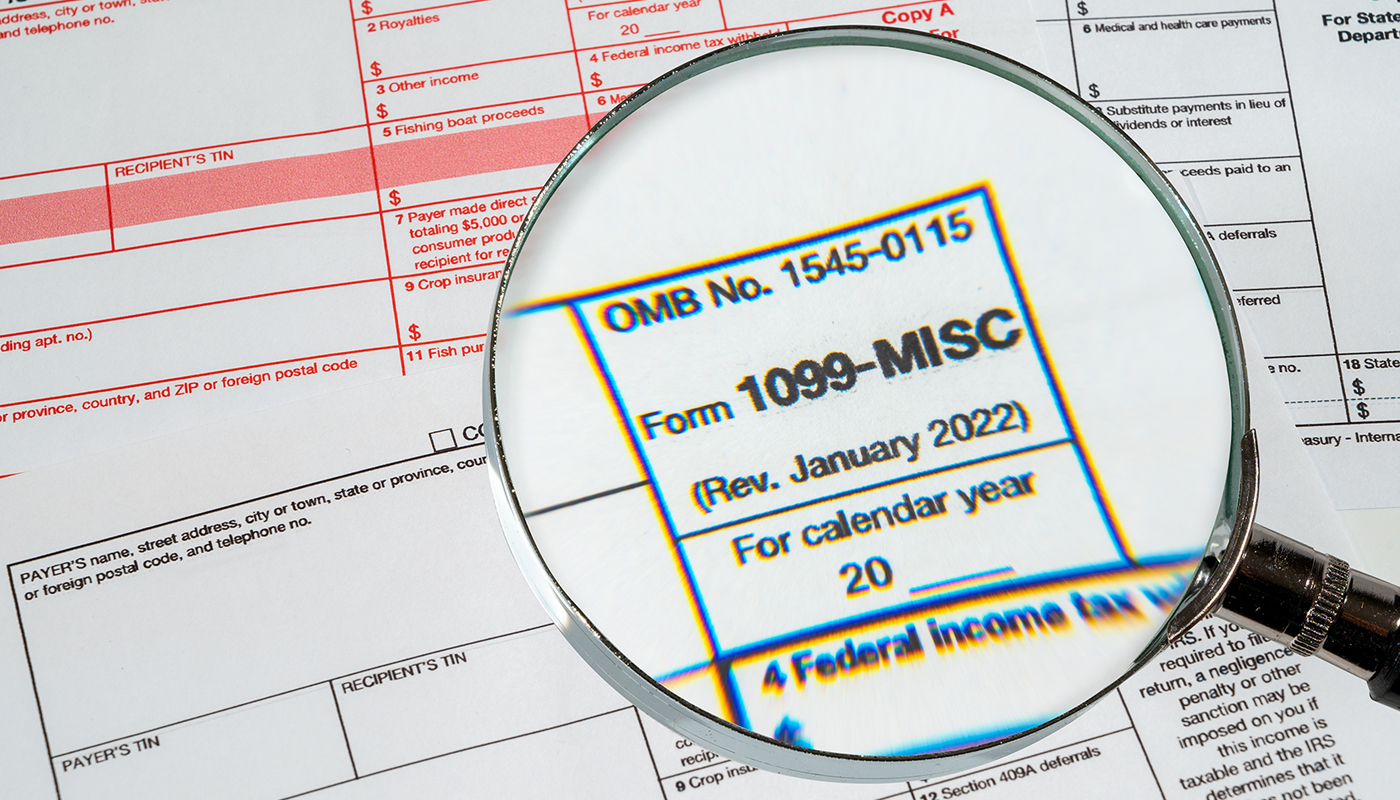
The Form 1099 reporting thresholds have changed from the old, familiar $600 amount to $2,000 for 2026. But because nothing is ever easy or straightforward, the threshold hasn’t changed for “all” transactions that might end up on a 1099, particularly with Form 1099-MISC.

What Do You Ask Indie Game Developers at Tax Interviews?
When you take on a new client, the tax interview is one of the most crucial elements of ensuring that their tax documents are prepared correctly. Both individual and business clients should provide you with a road map for their current tax situation, what they expect it to look like in the near future, and how your tax planning and preparation skills will help them with their business or financial goals. To focus specifically on business clients, questionnaires that the client fills out beforehand can efficiently cut down on facetime. This allows you more time to ask focused questions and learn about your client’s business needs and environment. But if your client is a game developer, specifically an indie game developer, there’s some nuanced questions you should ask in person or as an addendum to your questionnaire after you’ve read about the basics of doing business with game developers.